Skip to content
package
pathomorph v0.0.5 The RAW library to create SVG path elements out of geometric primitives
node * 1 deps esm cjs types open source
overview readme
license MIT
deps 1
unpacked 204.6 kB
files 28
node * $ npm install pathomorphn npmREADME GitHub-flavored package documentation.
downloads Across all versions, last 30 days.
3 weekly -70.0%
17 in 30 days
Oct 16 → Nov 14 hover or arrows
compatibility Runtime metadata.
*
keywords Tagged topics.
svg path primitives arc line rect polyline arrow partial path
versions Latest published Sep 11, 2025
maintainers Registry package owners.
contents Example Installation Usage API Documentation Line(p1, p2) LineOffset(p1, p2, offsetA = 0, offsetB = 0) Rectangle(p1, p2) Circle(center, radius) Ellipse(center, rx, ry, rotation = 0) Arc(center, radius, startAngle = 0, endAngle = TAU) Polyline(points) Polygon(points) RoundedRect(p1, p2, rx = 0, ry = 0) CurvedHorizontalLine(p1, p2) CurvedVerticalLine(p1, p2) CurvedLine(a, b, curvature = 0.5) ArrowTip(a, b) FilletCorner(A, B, C, radius) PartialPolyline(points, fraction) RingSegment(center, radius, thickness, startAngle, endAngle) Coding Style Building the library Copyright and Licensing Pathomorph.js
Convert and construct SVG path data programmatically.
Pathomorph is a compact utility for generating SVG path strings from geometric primitives and curves. It offers both transformation routines—such as converting rectangles or circles to path data and on the other hand path construction helpers like curved connectors, arrows, and rounded corners.
Example
< svg width = "300" height = "200" install size Estimated unpacked size across 2 packages.
262.0 kB
Includes dependencies.
dependencies 1 direct · 1 outdated
xmlns
=
"http://www.w3.org/2000/svg"
>
< path id = "rounded" stroke = "#3498db" fill = "none" stroke-width = "4" />
< path id = "connector" stroke = "#e74c3c" fill = "none" stroke-width = "3" />
< path id = "arrow" stroke = "#2ecc71" fill = "none" stroke-width = "2" />
</ svg >
< script type = "module" >
import Pathomorph from 'pathomorph' ;
const p1 = { x: 20 , y: 20 };
const p2 = { x: 180 , y: 120 };
const from = { x: 30 , y: 150 };
const to = { x: 250 , y: 50 };
document. getElementById ( 'rounded' )
. setAttribute ( 'd' , Pathomorph. RoundedRect (p1, p2, 15 , 15 ));
document. getElementById ( 'connector' )
. setAttribute ( 'd' , Pathomorph. CurvedLine (from, to, 0.4 ));
document. getElementById ( 'arrow' )
. setAttribute ( 'd' , Pathomorph. ArrowTip (from, to));
</ script >
copy
Installation You can install Pathomorph.js via npm:
npm install pathomorph copy Alternatively, download or clone the repository:
git clone https://github.com/rawify/Pathomorph.js copy
Usage Include the pathomorph.min.js file in your project:
< script src = "js/vector2.min.js" ></ script > < script src = "js/pathomorph.min.js" ></ script > < script > <!-- Access via global `Pathomorph` --> </ script > copy const Pathomorph = require ( 'pathomorph' ); copy import Pathomorph from "pathomorph" ; copy
API Documentation
All functions return a string suitable for use as an SVG path d attribute.
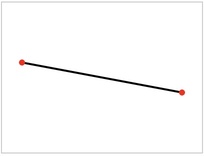
Line(p1, p2) Pathomorph. Line ({ x: 0 , y: 0 }, { x: 100 , y: 0 }) // "M0 0L100 0" copy
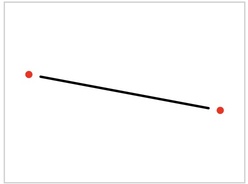
LineOffset(p1, p2, offsetA = 0, offsetB = 0) Creates a line shortened on both ends by fixed distances.
Useful for offsetting lines for arrows or gaps.
Returns "" if offsets exceed length.
Pathomorph. LineOffset ({ x: 0 , y: 0 }, { x: 100 , y: 0 }, 10 , 10 ) // "M10 0L90 0" copy
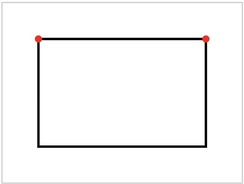
Rectangle(p1, p2) Generates a rectangular path between two diagonal points.
Pathomorph. Rectangle ({ x: 10 , y: 10 }, { x: 60 , y: 40 }) // "M10 10L10 40L60 40L60 10z" copy
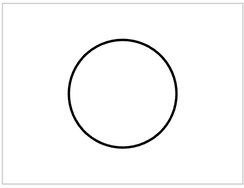
Circle(center, radius) Shortcut for Ellipse(center, radius, radius). Produces a circular path.
Pathomorph. Circle ({ x: 50 , y: 50 }, 20 ) copy
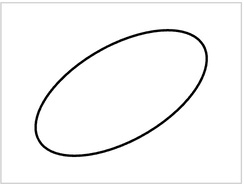
Ellipse(center, rx, ry, rotation = 0) Draws a full ellipse using two 180° arc segments.
Pathomorph. Ellipse ({ x: 60 , y: 40 }, 30 , 20 ) // Draws a full ellipse using two arcs copy
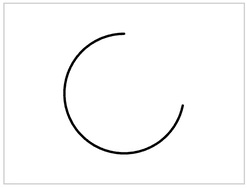
Arc(center, radius, startAngle = 0, endAngle = TAU) Draws a circular arc from startAngle to endAngle. Handles full circles automatically.
Pathomorph. Arc ({ x: 100 , y: 100 }, 50 , 0 , Math.PI) // Half-circle from 0 to π copy
Polyline(points) Connects a series of points with straight lines.
Pathomorph. Polyline ([ { x: 10 , y: 10 }, { x: 40 , y: 20 }, { x: 80 , y: 10 } ]) // "M10 10L40 20L80 10" copy
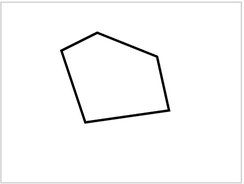
Polygon(points) Same as Polyline but closes the shape with a "z" command.
Pathomorph. Polygon ([ { x: 10 , y: 10 }, { x: 40 , y: 20 }, { x: 80 , y: 10 } ]) // "M10 10L40 20L80 10z" copy
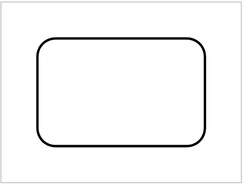
RoundedRect(p1, p2, rx = 0, ry = 0) Creates a rectangle with rounded corners. The rounding radii are clamped automatically if too large.
Pathomorph. RoundedRect ({ x: 20 , y: 20 }, { x: 120 , y: 80 }, 10 , 10 ) copy
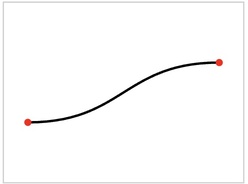
CurvedHorizontalLine(p1, p2) Creates a horizontal S-curve between two points using a cubic Bézier.
Pathomorph. CurvedHorizontalLine ({ x: 20 , y: 50 }, { x: 200 , y: 90 }) copy
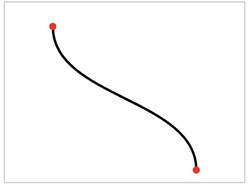
CurvedVerticalLine(p1, p2) Same as CurvedHorizontalLine but curves vertically.
Pathomorph. CurvedVerticalLine ({ x: 100 , y: 20 }, { x: 120 , y: 140 }) copy
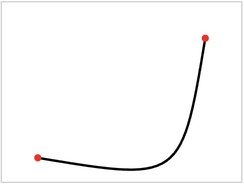
CurvedLine(a, b, curvature = 0.5) Draws a cubic Bézier from a to b, with curvature perpendicular to the line direction.
curvature controls bend magnitude (positive = right-turn from A→B) Pathomorph. CurvedLine ({ x: 30 , y: 150 }, { x: 250 , y: 50 }, 0.4 ) copy
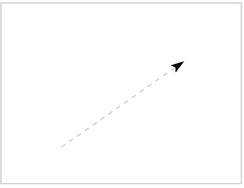
ArrowTip(a, b) Draws an arrowhead at b, pointing from a to b.
Returns a closed path suitable for filling.
Pathomorph. ArrowTip ({ x: 50 , y: 50 }, { x: 100 , y: 100 }) // Arrowhead pointing from (50, 50) to (100, 100) copy
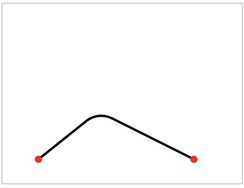
FilletCorner(A, B, C, radius) Rounds the corner at B (where A→B→C forms a bend) with a circular arc of the given radius, using the mathematically derived method explained here .
Pathomorph. FilletCorner ( { x: 20 , y: 60 }, { x: 60 , y: 60 }, { x: 60 , y: 20 }, 10 ) copy
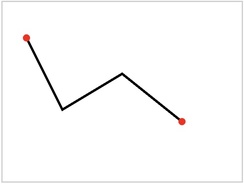
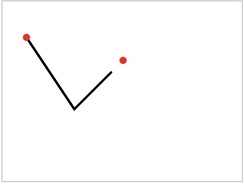
PartialPolyline(points, fraction) Draws a partial polyline (first fraction ∈ [0,1] of total length).
Useful for animation or stroke-drawing effects.
Pathomorph. PartialPolyline ([ { x: 0 , y: 0 }, { x: 100 , y: 0 }, { x: 100 , y: 100 } ], 0.5 ) // Draws the first 50% of the total polyline length copy
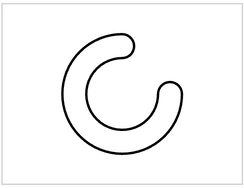
RingSegment(center, radius, thickness, startAngle, endAngle) Draws a donut slice (thick circular arc), capped at both ends with rounded edges.
Pathomorph. RingSegment ( { x: 100 , y: 100 }, 60 , 20 , 0 , Math.PI / 2 ) // Quarter ring segment copy
Coding Style As every library I publish, Pathomorph.js is also built to be as small as possible after compressing it with Google Closure Compiler in advanced mode. Thus the coding style orientates a little on maxing-out the compression rate. Please make sure you keep this style if you plan to extend the library.
Building the library After cloning the Git repository run:
npm install
npm run build
copy
Copyright and Licensing Copyright (c) 2025, Robert Eisele
Licensed under the MIT license.